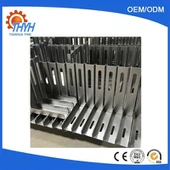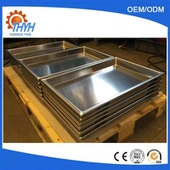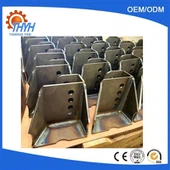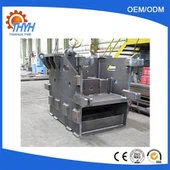
Welded Joints
A welded joint refers to the contact area between two or more workpieces intended for connection during the welding process. Depending on the shape, thickness, and specific requirements of the workpieces, welded joints can be classified into various forms, such as butt joints, corner joints, and T-joints. Selecting an appropriate joint configuration is crucial for ensuring the structural strength and leak-tightness of the welded assembly.
Welds
A weld is the connecting section formed when the molten metal cools and solidifies during the welding process. The quality of the weld directly determines the performance characteristics of the welded joint. Based on their position and geometry, welds can be categorized into transverse welds, longitudinal welds, circumferential welds, and others. Welds must exhibit robust mechanical properties and effective leak-tightness to satisfy the intended operational requirements.
Fusion Zone
The fusion zone is the transitional region situated between the molten metal and the unmolten base metal during the welding process. Within the fusion zone, the chemical composition, microstructure, and mechanical properties of the metal undergo significant alterations. The width and properties of the fusion zone are influenced by various welding process parameters, such as welding current and welding speed. Judicious control over the width and characteristics of the fusion zone is essential for enhancing the overall performance of the welded joint.
Heat-Affected Zone (HAZ)
The heat-affected zone (HAZ) refers to the region of the base metal that, while not melted during the welding process, is subjected to thermal influence. Within the HAZ, the microstructure and mechanical properties of the metal are altered due to varying degrees of thermal exposure. The extent of the HAZ-both in terms of size and the magnitude of property changes-depends on the specific welding process parameters and the thermophysical properties of the material being welded. Understanding the changes in properties within the HAZ is instrumental in predicting the service life and safety of the welded joint.