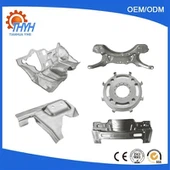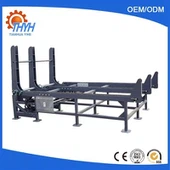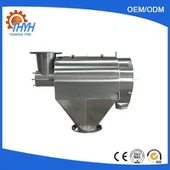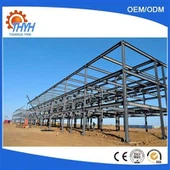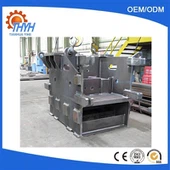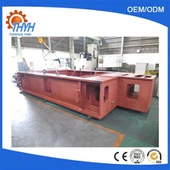
Surface treatment for the anti-corrosion processing of large-scale welded components primarily aims to remove surface impurities, enhance aesthetic quality, and improve corrosion resistance. Common methods revolve around cleaning, rust removal, and protective coating; the specific treatment approach is selected based on the intended application and requirements of the workpiece.
Grinding is the most fundamental surface treatment method. It utilizes tools such as angle grinders and bench grinders to smooth out weld beads, spatter, and burrs on weld seams, as well as scratches and dents on the workpiece surface. This process renders the surface flat and smooth while simultaneously removing mill scale and rust, thereby laying the foundation for subsequent rust removal and anti-corrosion treatments. During the grinding process, the applied force must be carefully controlled to prevent excessive material removal that could result in a reduction of the workpiece's wall thickness.
Sandblasting is suitable for welded components that require a high degree of surface roughness and thorough rust removal. This method employs a high-pressure air stream to propel abrasive media-such as quartz sand or corundum-onto the workpiece surface. The impact force of the abrasives removes mill scale, rust, grease, and old coatings, creating a uniformly roughened surface profile. This not only enhances the effectiveness of rust removal but also improves the adhesion of subsequent protective coatings. Following sandblasting, the workpiece surface must be promptly cleaned to remove any residual abrasive media and dust.
Acid pickling and phosphating treatments are primarily employed to enhance the corrosion resistance of welded components. During the pickling stage, an acidic solution is used to remove mill scale and rust from the workpiece surface. The subsequent phosphating stage creates a dense phosphate film on the surface, which effectively prevents rusting while simultaneously strengthening the bond between the protective coating and the workpiece substrate. After acid pickling and phosphating, the workpiece must undergo thorough rinsing and drying to prevent any residual acidic solution from corroding the material.
Additionally, surface coating treatments-including painting and powder coating-are utilized to apply a protective layer to the workpiece surface. These treatments further enhance both corrosion resistance and aesthetic quality, making them particularly suitable for welded components that are intended for long-term exposure to harsh environments.