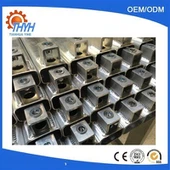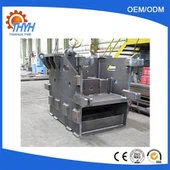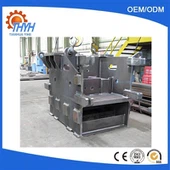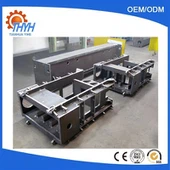
The welded assembly of steel base frames-a fundamental and critical metal structural fabrication process-involves utilizing welding techniques to join metal components, such as structural steel sections and plates, into a robust load-bearing or supporting framework. Renowned for its high structural strength, design flexibility, and exceptional load-bearing capacity, this process is widely employed across numerous civil and industrial sectors.
In the field of construction engineering, the welded assembly of steel base frames serves as the core structural element for steel-framed industrial plants, large-scale venues (such as sports stadiums and exhibition centers), and commercial complexes. The welded steel beams and columns form the "skeleton" of the building, enabling the creation of large-span interior spaces while facilitating rapid construction. In the transportation sector, precision-welded frames are indispensable for a wide range of applications-from highway noise barrier supports, bridge guardrails, and various ancillary structures, to the platform canopies found in subway stations. As these frameworks must withstand prolonged exposure to the elements and structural vibrations, the quality of the welding is of paramount importance.
The industrial sector represents another major arena for welded frame applications. Typical examples include heavy-duty equipment bases within factories, conveyor system frames on assembly lines, large-scale warehouse racking systems, and pipe rack supports in the petrochemical industry. These structures are required not only to support immense loads but, in some instances, to adapt to specific environmental conditions-such as the need for corrosion resistance or heat resistance-thereby imposing rigorous demands on both the welding materials and the fabrication processes employed.