Sheet Metal Parts
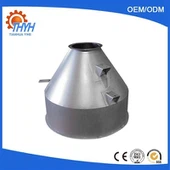
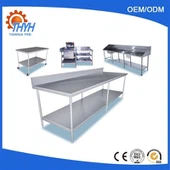
Sheet metal parts refer to components that are not specifically designed as load-bearing structural members; they are typically used for decorative elements, enclosures, protective covers, mechanism plates, and similar components. Due to their lower manufacturing costs, sheet metal parts are frequently utilized in economical mechanical equipment. The advantages of welding sheet metal parts include ease of processing and simple control over weld points; however, their disadvantage lies in their lower structural strength, rendering them unable to withstand significant external forces.
Pipe Fittings
Pipe fittings are another common type of welded component, widely employed across various piping systems. These fittings encompass a diverse range of types, including pipe caps, elbows, tees, reducers, and more. The advantages of pipe fittings include high manufacturing precision, smooth internal surfaces, and high weld-point strength. However, a disadvantage of pipe fittings is that the welding process requires careful attention to joining pipes of varying wall thicknesses, as well as vigilance to prevent defects such as porosity, lack of fusion, and surface irregularities.
Structural Profiles
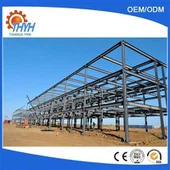
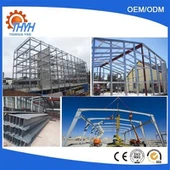
Structural profiles are a common category of welded metal components, typically used to fabricate structurally stable support members, frameworks, and similar assemblies. Profiles are classified into various types, such as angle steel, I-beams, channel steel, and flat bars. Their advantages include a large contact area for welding-resulting in high joint strength-as well as a long service life and a high load-bearing capacity. Conversely, their disadvantage lies in the relatively high complexity of their processing, which necessitates specific preparatory operations-such as cutting, chamfering, and drilling-prior to welding.
Linkages
Linkages are a frequently used type of welded component in mechanical systems, primarily serving to connect disparate parts and transmit power. Examples of linkages include steering rods, pedal linkages, and gearshift rods. The advantages of linkages include high weld strength, a compact structural design, and excellent wear resistance; however, their disadvantages include the requirement for high-precision machining, as well as the fact that different types of linkages are designed to withstand varying levels of mechanical load.