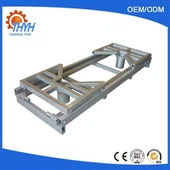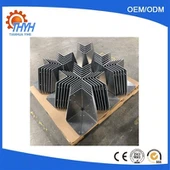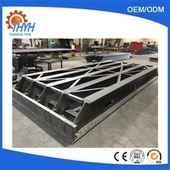
After reviewing hundreds of RFQs and drawing packages for frames, chassis sections, brackets, guards, and hoppers from agricultural OEM buyers across different markets, our engineering team at Qingdao Tianhua Yihe Metal Fabrication (qdthyhmetalfab.com) has seen five capability areas that separate the two. The good news: every one of them can be checked before a purchase order is signed.
The parts described below - mainframes, gusseted chassis sections, hitch brackets, guards, and hoppers - sit in our agricultural machinery fabrication range, which is a useful reference for the form these components actually take.
Reader's Checklist: The Agricultural OEM Edition
| Item | Minimum to expect | Why it matters |
|---|---|---|
| Fabrication depth | Cutting, bending, welding, and finishing under one quality system | Every outsourced handoff is a place to slip |
| Welding to ISO 3834 | WPS, qualified welders, weld logs on file | Field loads are fatigue loads; documents are how you audit for them |
| Material traceability | EN 10204 3.1 certificates, heat numbers through to the finished part | A field failure gets root-caused in hours, not weeks |
| Milestone updates | Five checkpoints from material release to loading | Season deadlines do not forgive silent slips |
| Coating specified, not assumed | HDG to AS/NZS 4680 or a named coating system in the quote | Mud, fertilizer, and washdown punish vague finishes |
| DFM review before pricing | Feedback on bends, holes, weld access, and galvanizing drainage | The cheapest engineering you will ever buy |
| Inspection access | Third-party checks welcomed, records produced on request | Trust should be verifiable, not assumed |
1. Fabrication Depth Under One Roof
An implement program rarely stays a single process. A mainframe starts as plate, gets cut, formed, welded, and coated - and every transfer between separate vendors is a chance for stack-up tolerances, damaged surfaces, or a schedule nobody owns.
•One quality system across the chain. Fiber laser cutting, CNC bending, welding, and HDG finishing reporting to one process owner means dimensional handoffs are controlled, not negotiated between suppliers. Our sheet metal fabrication line runs exactly this chain, from flat pattern to finished assembly.
•Ask which operations are in-house - and who inspects the rest. Equipment classes matter more than equipment logos: multi-kilowatt fiber lasers for plate, CNC press brakes for consistent angles, overhead cranes and heavy-duty forklifts for large frames. Anything outsourced should have a named inspector.
•One process file per part number. Revision-controlled drawings, WPS, and an inspection plan that follows the job from first article to every repeat order.
What to ask instead of "What can you make?": "Which operations happen in your plant, and who inspects the ones that go out?"
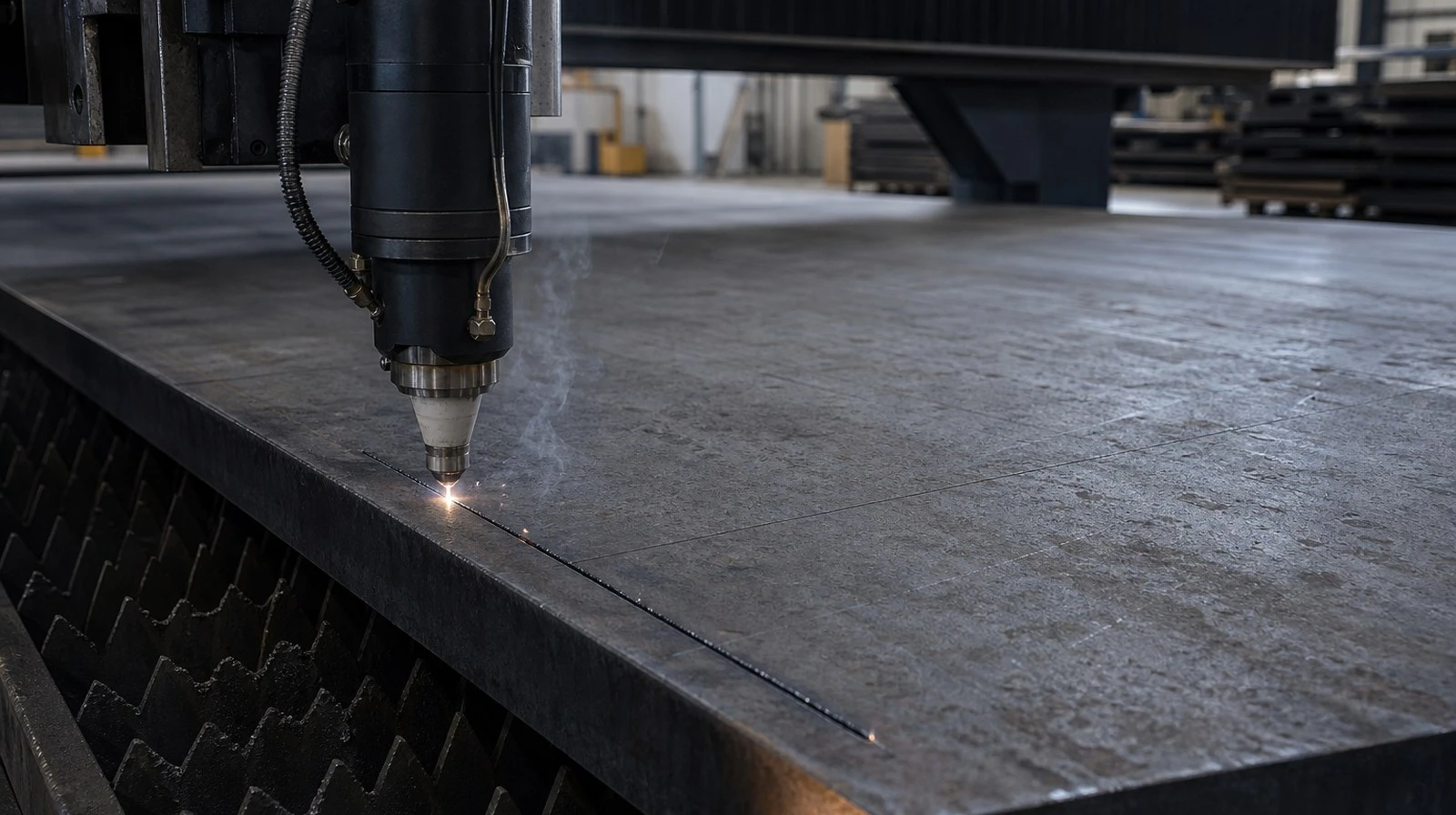
Fabrication depth starts at the cutting table: one process owner from flat pattern to finished part.
2. Welding Built for Field Loads
A cultivator frame or loader chassis never sees laboratory loads. It sees shock, torsion, and vibration - which makes weld quality a fatigue question, not a cosmetic one.
•Welding managed to ISO 3834 - welding procedure specifications, qualified welders, and weld logs on file. For structural members, workmanship benchmarks such as AS/NZS 5131 or your local equivalent should be part of the WPS conversation. Our heavy plate welding service shows how that documentation chain is structured.
•Visual inspection on every weld, with records - VT performed in-house with a documented weld log; UT or MT available through audited partners on request when the application calls for it.
•Preheat verified, not assumed - checked at 25 mm from the groove edge or 1.5× plate thickness (whichever is greater) on both faces, re-verified after any welding interruption, and applied to tack welds too. A cold tack is a crack starter.
•Joint design that respects vibration - continuous welds along load paths and weld access planned early, so the weld you get is the geometry the engineer intended.
Better approach: ask for a weld log and WPS from a recent chassis or implement program. A manufacturer who actually runs the system will produce both without rehearsal.
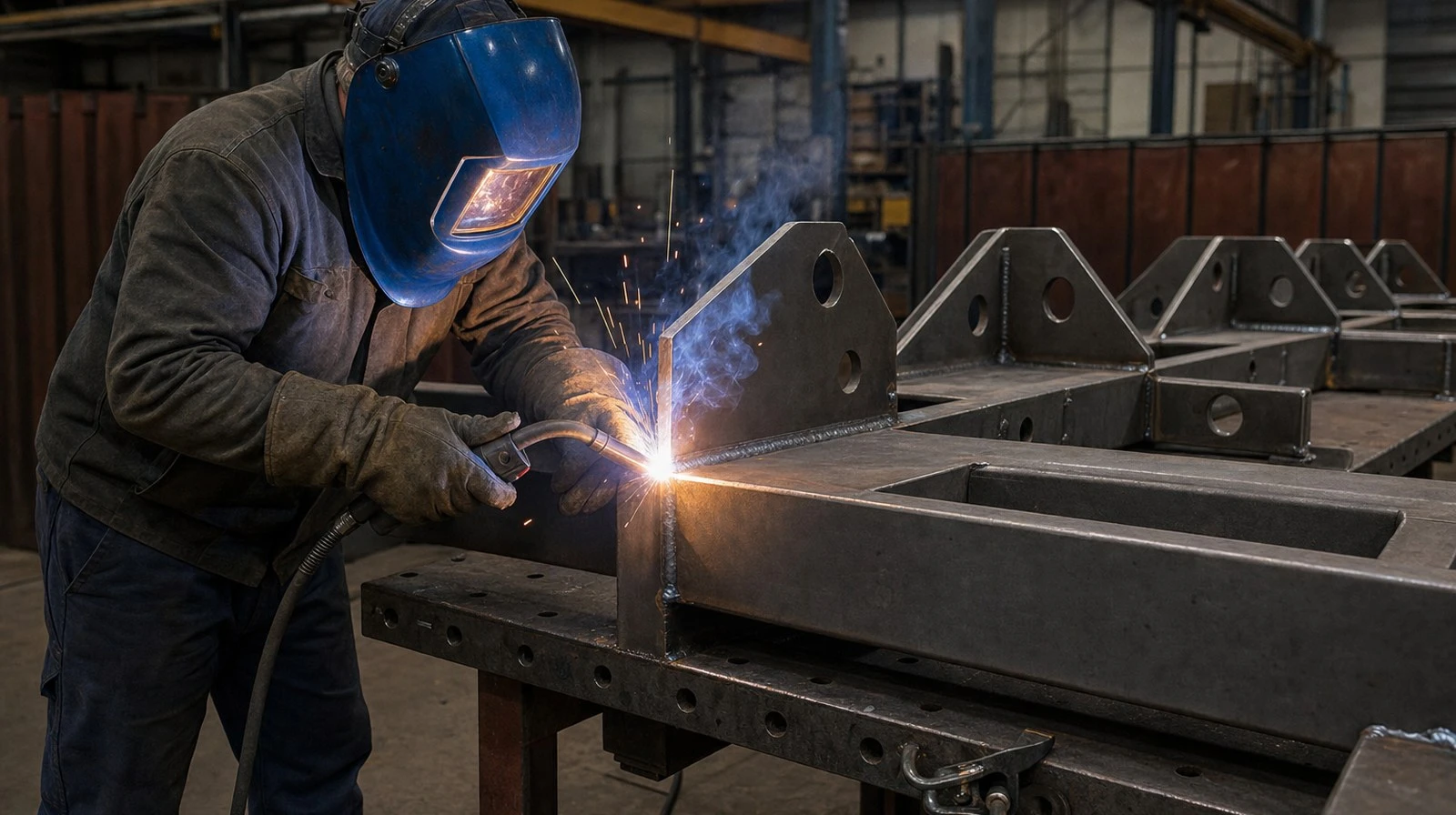
Field loads are fatigue loads - weld quality is audited through documentation, not promises.
3. Traceability and Milestones That Protect the Season
When a part fails during harvest, the questions arrive fast: which heat of steel, which weld, which batch?
•Material certificates to EN 10204 3.1 - heat numbers traceable from incoming plate to the finished part, so a field failure gets root-caused in hours instead of weeks.
•Five milestone updates on every order - material released → cut → welded → galvanized or finished → loaded, each with a date. Our structural steel OEM workflow runs on exactly this spine.
•Packaging that arrives the way it left - seaworthy packing, blocking, and loading photographs for container shipments.
4. Coating for Field Conditions
Mud holds moisture against steel. Fertilizer is corrosive. Washdowns strip weak films. A coating line item needs engineering behind it:
•Hot-dip galvanizing to AS/NZS 4680, performed in-house - zinc coating records that travel with the order, and vent and drainage holes designed into the part rather than drilled as an afterthought.
•Powder or paint systems chosen by environment - applied over galvanizing (duplex) or standalone; ask which systems are applied in-house, which go through partners, and who stands behind each.
•Surface preparation documented - weld spatter removed and edges rounded before coating, because a coating is only as good as what is under it.
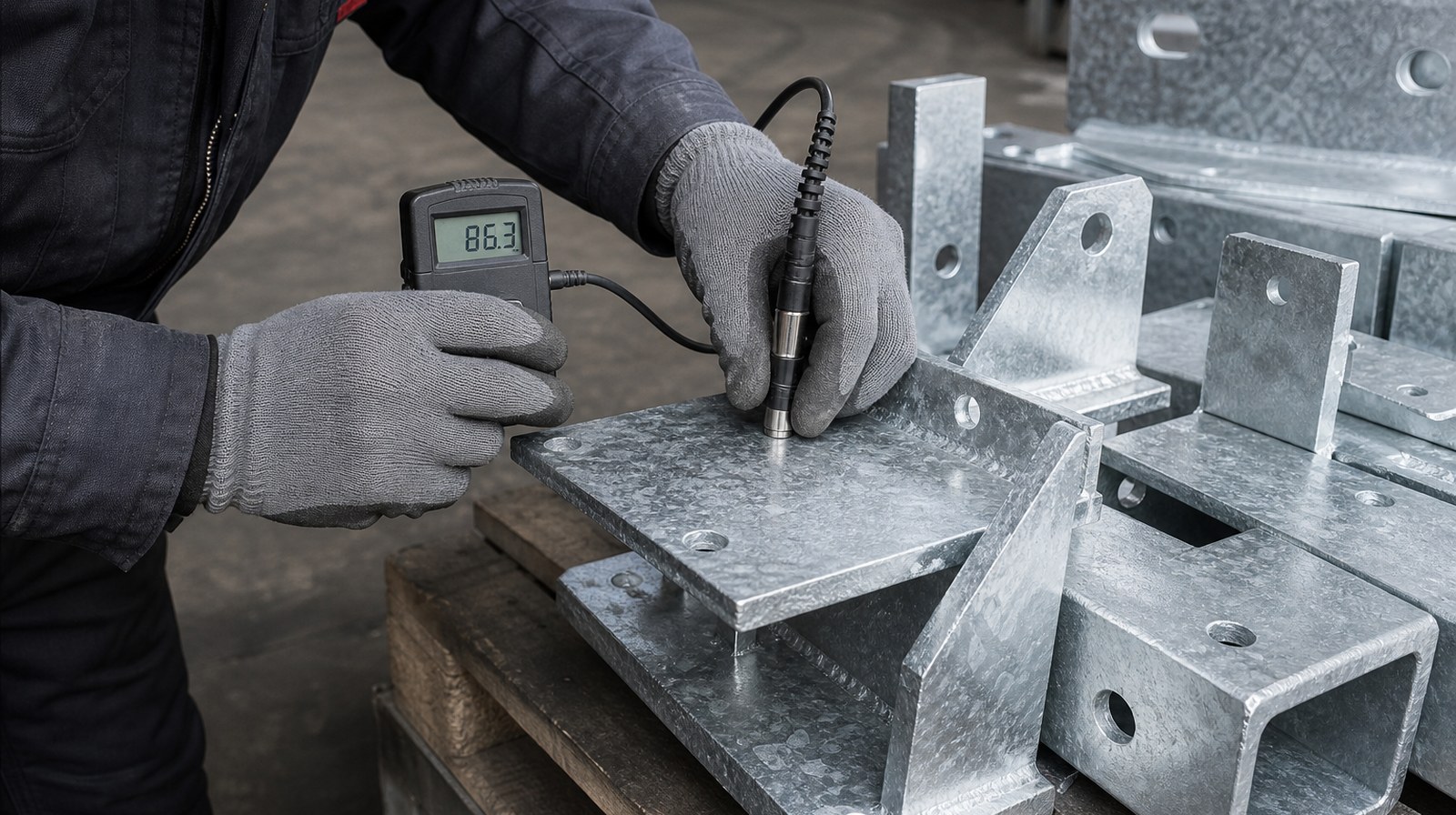
HDG to AS/NZS 4680, with coating records that travel with the order.
5. DFM and Communication - The Visible Culture
The way a manufacturer behaves before the PO predicts how it behaves after:
•DFM feedback before pricing. Bend radii, hole-to-bend distances, weld access, galvanizing drainage - an engineer who flags these on a first drawing is planning for your second order.
•Functional tolerances only. Tolerance the bearing seat and the pin bore; leave the rest within general limits and watch per-unit cost drop.
•Consolidation flagged, not buried. Two brackets joined into one formed part means fewer welds, less fit-up variation, and one less line on your BOM.
•Third-party inspection welcomed. SGS, BV, or TÜV pre-shipment checks treated as routine, and one technical contact who actually read your drawing.
Core Takeaways
•Fabrication depth is schedule insurance - one quality system across cutting, bending, welding, and finishing means fewer handoffs to slip.
•Field loads are fatigue loads - ISO 3834 documentation and verified preheat are how you audit for them.
•Traceability turns field failures into hours of investigation, not weeks - EN 10204 3.1 certificates with heat numbers through to the finished part.
•Specify the coating, don't assume it - HDG to AS/NZS 4680 with drainage designed in.
•Pre-PO behavior predicts post-PO behavior - DFM feedback and inspection access are the culture test.
Frequently Asked Questions
What certifications should an agricultural machinery parts manufacturer have?
Look for ISO 3834 welding quality management, EN 10204 3.1 material certificates with heat numbers traceable to the finished part, and a named galvanizing standard such as AS/NZS 4680. For structural members, a workmanship benchmark such as AS/NZS 5131 should be part of the welding procedure specification conversation.
How do you verify weld quality on implement frames and chassis?
Ask for the WPS and a weld log from a recent implement or chassis program. Visual inspection should be performed on every weld with records kept, with UT or MT available through audited partners when the application calls for it. Preheat should be verified at 25 mm from the groove edge or 1.5 times the plate thickness, whichever is greater, on both faces, and re-verified after any welding interruption.
What coating holds up to fertilizer, mud and washdown?
Hot-dip galvanizing to AS/NZS 4680, with vent and drainage holes designed into the part rather than drilled afterwards. Powder or paint can be applied over galvanizing as a duplex system or used standalone, selected by the environment the part sees. Surface preparation, including spatter removal and edge rounding, determines how well any coating performs.
Can a single supplier handle cutting, bending, welding and galvanizing?
That is the configuration to look for. Fiber laser cutting, CNC bending, welding and hot-dip galvanizing reporting to one process owner keeps dimensional handoffs controlled instead of negotiated between suppliers. Anything outsourced should have a named inspector.
What do I need to send for an OEM parts quote?
A drawing, the material specification, and the target quantity. DFM feedback on bend radii, hole-to-bend distances, weld access and galvanizing drainage should come back before pricing, not after.
Get an OEM Parts Quote That Accounts for the Field
Send us your drawing, material specification, and target quantity - mainframes, chassis sections, brackets, guards, or hoppers. We will return a DFM report within 48 hours covering tolerance feasibility, welding joint recommendations, coating options, and design changes that cut cost without cutting strength. No commitment required.
Related Reading
•Agricultural Machinery Fabrication
•Sheet Metal Fabrication Service
•Structural Steel OEM Manufacturing
About the Publisher
Qingdao Tianhua Yihe Metal Fabrication - Qingdao, China - qdthyhmetalfab.com
We support OEMs and engineering teams across different markets with custom sheet metal parts, medium and heavy plate welding, and structural steel fabrication, with ISO 3834 welding quality management and HDG finishing to AS/NZS 4680 supported.