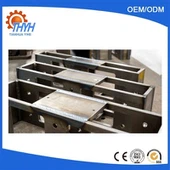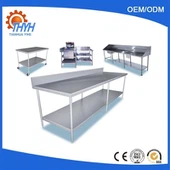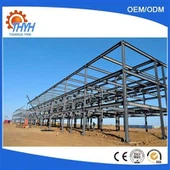

TL;DR: Price and lead time are the easy numbers. The real risk hides in seven red flags - tolerance gaps, missing material certs, vague cut methods, guessed bend allowances, undocumented welding, hidden HDG batch delays, and quotes with no DFM review. This guide gives you a checklist to spot them before you sign, plus three ways to raise each issue with your supplier without damaging the relationship.
When a sheet metal fabrication quote lands in your inbox, most buyers scan two numbers: unit price and delivery date. That's exactly what suppliers count on.
An Australian OEM buyer once sent us 48 mounting brackets cut by another shop. The supplier used "general tolerance"; every locating hole was ±0.4mm off. Re-drilling in Australia added three days and missed the handover window. The real cost of a quote is rarely on the first page.
The seven red flags below are where that cost hides.
Quick nav: 1. Tolerance · 2. Material Cert · 3–6. Compressed Checks · 7. DFM Feedback · How to Raise Issues · About
The 7 Red Flags at a Glance
| Check | Red Flag | Green Flag |
|---|---|---|
| 1. Tolerance | Quote says "general tolerance" only | References ISO 2768-mK or equivalent; tight features called out |
| 2. Material cert | "Available on request" | 3.1 or 3.2 mill certificate included as line item |
| 3. Cut method | "Cut to size" with no process named | Laser/plasma/flame specified, with edge/HAZ note |
| 4. Bend allowance | "We'll see when we form it" | Calculated per material, thickness, and tooling radius |
| 5. Welding spec | No WPS reference | WPS listed, ISO 3834 certification noted |
| 6. HDG timing | Folded into "surface treatment" | Separate line item with realistic batch timeline |
| 7. DFM feedback | No review step before cutting | DFM review with turnaround time; FAI offered |
If a quote shows more than two red flags, pause before you sign.
1. Tolerance: "General Tolerance" Is a Blank Check
Tolerance specification is the single biggest cost driver most buyers overlook. A quote that says "general tolerance" without a specific ± value leaves the door open to whatever the shop finds convenient - often ±0.5mm or wider. Fine for a bracket; fatal for a mating flange or locating hole pattern.
An Australian solar hardware customer's previous supplier delivered 200 base plates with mounting slots "within general tolerance." The slots were 0.6mm off, screws wouldn't bite, and the batch had to be slot-milled locally.
What to check
Does the quote reference a standard like ISO 2768-mK?
Are tight-tolerance features called out individually?
Does the shop's capability match the tolerance claimed?
A shop running a 6kW fiber laser can hold ±0.1mm on cut features on plate up to 25mm - but only if the quote says so. (Figure from our in-house cutting validation on mild steel.)
If you're buying sheet metal parts for precision assemblies, tolerance isn't a footnote. It's the contract.

2. Material Certificate: Traceable or Verbal?
Material traceability separates a fabrication partner from a cutting service. For Australian structural or mining work, the steel needs a mill certificate tracing the heat number to the original melt.
The red flag is subtle: "material certificate available on request." That usually means the shop hasn't ordered the material yet and may substitute a close-but-not-identical grade when stock runs short. A transport equipment buyer specified Grade 350 steel for chassis brackets; the supplier delivered Grade 250 because "it was what the mill had in stock." Third-party inspection caught it at the port.
What to check
Is the material certificate a line item, not an optional extra?
Is it EN 10204 3.1 or 3.2?
Does the quote name the exact grade and standard?
For structural work, this isn't bureaucracy. It's pass inspection or get rejected at the border.
3–6. Cut Edge, Bend, Welding & HDG - The Four Compressed Checks

All four can sink a project if missing.
3. Cut method
Cut method determines edge squareness, heat-affected zone (HAZ) depth, and secondary machining needs.
Fiber laser: clean, near-perpendicular edge, HAZ under 0.2mm on plate up to 25mm (per our machine spec and in-house verification).
Plasma: slight bevel, wider HAZ.
Flame: thick plate only; usually needs grinding before welding.
Red flag: "cut to size" with no process named.
4. Bend allowance
Every bend has a K-factor driven by material grade, thickness, and tooling radius. Wrong K-factor = 0.5–1mm off per bend. Across a multi-bend part, that's a failed assembly. Red flag: "We'll see when we form it."
5. Welding spec
If your part includes welded tabs or brackets, ask for a WPS and confirm the shop works to ISO 3834. For thin sheet welded to heavier sections, the thicker part drives the thermal cycle. A cold tack on a mismatched joint is a crack starter. Preheat verification should be taken at least 25mm or 1.5× plate thickness from the joint edge, whichever is larger, on both sides. More on our heavy plate welding setup.
6. HDG timing
Hot-dip galvanizing to AS/NZS 4680 is a batch process. Miss a batch and you wait 3–7 days not shown on the quote. One customer's quote showed "surface treatment: included" with no batch schedule; the kettle went down and parts arrived two weeks late.
7. DFM Feedback: The Most Telling Line Item
DFM (Design for Manufacturing) feedback is the clearest signal of whether a shop will save you money or cost you rework. A good fabricator reviews your drawings before cutting and flags issues: unreachable bends, tolerance stacks that don't functionally matter, slot-and-tab patterns that don't self-locate. In the past 12 months we reviewed 20+ Australian OEM sheet metal projects; each review caught 2–3 manufacturability issues before the first cut.
What to check
Does the quote include a DFM review step with a turnaround time?
Does the shop offer First Article Inspection (FAI) on the first batch?
Will you receive a written feedback report?
"We used to compare quotes on price alone. After one batch of brackets had to be re-drilled in Australia, we now run these checks on every PO." - Anonymous Australian OEM procurement manager
If the quote reads "ship-ready in X weeks" with no review step, you're betting the shop catches your design issues - or doesn't, and you catch them at assembly.
How to Raise These Issues Without Damaging the Relationship
Spotting red flags is step one. Step two is raising them without turning the supplier defensive.
Ask for it in writing. Harder to brush off than a phone call.
Tie it to acceptance criteria. Link the requirement to fit or function, then ask for it as a quoted acceptance condition.
Request a first article before the full batch. Lets the supplier prove capability without committing the whole order.
If you want to fast-track screening, our online quote review uploads your drawings and runs an automated DFM screen against these seven points.
The Bottom Line
A sheet metal fabrication quote is a contract, not a price list. These seven checks take 15 minutes and tell you more about the shop than any factory tour video.
About Qingdao Tianhua Yihe Metal Fabrication
Qingdao Tianhua Yihe Metal Fabrication operates a 7,000m² shop in Qingdao, China, specialising in sheet metal fabrication, heavy plate welding, and structural steel OEM for Australian and global markets.
Capabilities & track record: 6kW fiber laser cutting (±0.1mm), ISO 3834 welding quality, AS/NZS 4680 HDG, AS/NZS 5131 structural steel workmanship. In the past 24 months we delivered 80+ sheet metal OEM projects to Australian clients with a first-pass assembly rate above 94%.