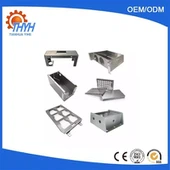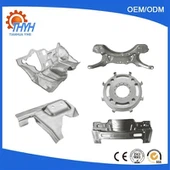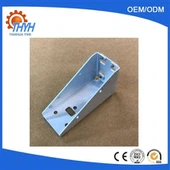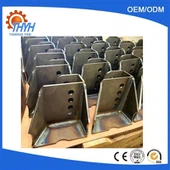
What Is Custom Steel Structure Fabrication?
Custom steel structure fabrication is the end-to-end process of transforming raw steel materials into finished structural components or complete assemblies according to client-specific design drawings and engineering requirements. The process encompasses cutting, bending, welding, machining, surface treatment, and assembly-all performed under stringent quality control protocols.
The fundamental distinction between custom fabrication and standardized production lies in flexibility. Standardized products are manufactured in bulk with fixed dimensions and specifications, while custom fabrication accommodates unique project requirements: non-standard shapes, specific load-bearing capacities, special surface treatments (such as AS/NZS 4680 hot-dip galvanizing for Australian conditions), and tight dimensional tolerances. At Tianhua Yihe, our ISO 9001:2015-certified facility processes steel plates ranging from 3mm to 80mm thickness, with welding capabilities certified to international structural standards.
Key Technologies in Custom Steel Fabrication
1. Precision Cutting
Modern custom fabrication begins with high-precision cutting. CNC laser cutting achieves accuracy of ±0.2mm on plate thicknesses up to 25mm, while flame cutting handles thicker plates (up to 300mm) for heavy structural components. For complex geometries, plasma cutting offers an efficient balance of speed and precision on mid-range plate thicknesses. The choice of cutting method depends on material thickness, required tolerance, and project budget.
2. Forming and Bending
Press brake bending forms steel plates into angles, channels, and custom profiles. CNC press brakes with multi-axis back gauges can achieve bend accuracy of ±0.5mm and angle precision of ±0.5°. For thicker plates used in heavy structural applications, roll bending creates cylindrical and conical sections for columns, pipes, and tanks.
3. Welding and Joining
Welding is the core technology that determines structural integrity. Key processes include:
MIG/MAG welding (GMAW): High-deposition-rate process ideal for medium to thick plate welding (3mm–50mm+). Our robotic welding cells ensure consistent weld quality and penetration.
TIG welding (GTAW): Precision process for thin-gauge materials and critical joints requiring superior aesthetics and root penetration.
Submerged Arc Welding (SAW): Deep penetration process for heavy structural members, achieving single-pass welds on plates up to 20mm thick.
All welding operations at Tianhua Yihe follow ISO 3834 quality requirements and are performed by certified welders. Our robotic welding systems maintain consistent heat input, minimizing distortion and heat-affected zone (HAZ) issues.
4. Machining and Finishing
CNC machining centers handle drilling, milling, and tapping operations to achieve precise hole patterns and mounting surfaces. Post-weld machining ensures that mating surfaces meet flatness and parallelism requirements specified in engineering drawings.
Material Selection for Custom Steel Structures
Material selection directly impacts structural performance, cost, and service life. The most common materials in custom structural fabrication include:
Q235/Q345 Carbon Steel: The workhorse of structural fabrication, offering excellent weldability and cost-effectiveness. Q345 (yield strength 345 MPa) is preferred for load-bearing structures.
AS/NZS 3678 Grade 300/350: Australian-standard structural steel plates commonly specified in local projects.
Stainless Steel (304/316): Selected for corrosive environments such as marine and chemical processing applications. Grade 316 offers superior chloride resistance for coastal installations.
Wear-Resistant Steel (Hardox/AR400): Used in mining and material handling equipment where abrasion resistance is critical.
Each material requires specific welding procedures, preheat temperatures, and post-weld treatment protocols. Our engineering team provides material recommendations based on the project's operating environment, load requirements, and applicable standards.
Quality Control and Standards
Quality assurance in custom steel fabrication is non-negotiable. Our quality management system, certified to ISO 9001:2015, encompasses:
Material traceability with mill test certificates (MTC) for every steel batch
In-process inspection at each manufacturing stage (first-article inspection, in-process checks, final inspection)
Non-destructive testing (NDT) including ultrasonic testing (UT) and magnetic particle inspection (MT) for critical welds
Dimensional verification using CMM and laser measurement systems
Surface treatment inspection per AS/NZS 4680 for hot-dip galvanized items
Key Takeaways
Custom steel fabrication combines cutting, forming, welding, machining, and surface treatment to produce project-specific structural components
Material selection (carbon steel, stainless, wear-resistant) must align with the operating environment and structural requirements
Robotic welding and CNC cutting ensure consistent quality and tight tolerances across production runs
ISO 9001 quality systems and NDT testing are essential for structural integrity and compliance
AS/NZS 4680 hot-dip galvanizing is the gold standard for corrosion protection in Australian conditions
Need Custom Steel Structure Fabrication?
Our ISO 9001-certified facility delivers precision-fabricated steel structures with tolerances as tight as ±0.5mm. With 20+ years of experience serving the Australian market, we understand your project requirements.
Email: andywang@qdthyhmetalfab.com | WhatsApp: +86 138 6398 9651
Explore our structural steel fabrication capabilities or request a free quote within 24 hours.