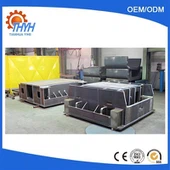
Understanding where and how custom steel structures are applied-along with the cost drivers and style options-empowers project managers and procurement teams to make informed decisions. This guide builds on our Complete Guide to Custom Steel Structure Fabrication by exploring real-world applications across Australian industries, analyzing cost components, and providing a framework for selecting the right structural style for your project.
Primary Application Scenarios
1. Mining and Resources Sector
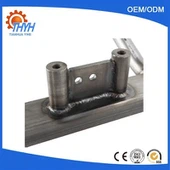
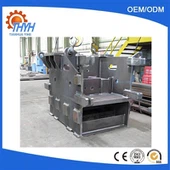
Western Australia's mining industry is one of the largest consumers of custom-fabricated steel structures. Applications include equipment support frames, conveyor structural members, hopper and chute assemblies, and access platforms. Mining environments demand heavy-wall welded construction with wear-resistant overlays and rigorous NDT inspection. Tianhua Yihe has supplied OEM welded assemblies for mining equipment manufacturers, working to drawings with tolerances as tight as ±0.5mm on critical mating surfaces.
2. Civil Infrastructure & Retaining Walls
Retaining wall systems-particularly hot-dip galvanized steel posts conforming to AS/NZS 4680-are widely used in highway construction, railway embankments, and urban development projects across Australia. Custom fabrication allows for site-specific post heights, cross-sections, and base plate configurations. The AS/NZS 4680 standard specifies minimum zinc coating thickness (85μm for most atmospheric environments), ensuring 50+ years of corrosion protection in typical Australian conditions.
3. Solar Mounting Systems
Australia's booming solar energy sector requires custom-fabricated mounting structures that withstand extreme UV exposure, high wind loads (Region C and D), and corrosive coastal atmospheres. Custom steel fabrication enables project-specific array geometries, adjustable tilt mechanisms, and foundation configurations optimized for local soil conditions. Hot-dip galvanized steel is the standard material, with HDG coating providing long-term corrosion resistance without maintenance.
4. Agricultural and Industrial Equipment
Custom steel structures form the backbone of agricultural machinery frames, grain handling systems, and industrial equipment housings. These applications typically require medium-plate (6mm–25mm) welded construction with machined mounting surfaces and protective coatings suited to outdoor exposure.
Cost Analysis: What Drives the Price of Custom Steel Fabrication?
Understanding cost components helps buyers evaluate quotes and identify optimization opportunities. The major cost drivers in custom steel fabrication include:
1. Material Costs (40–55% of total)
Steel plate and section prices fluctuate with global market conditions. Material grade, thickness, and special properties (e.g., weathering steel, stainless) significantly impact cost. Consolidating material specifications across project components can unlock volume purchasing discounts.
2. Labor and Processing (25–35%)
Cutting, bending, welding, and machining labor represent the second-largest cost block. Complex geometries, tight tolerances, and extensive welding increase labor hours. Designing for manufacturability (DFM)-such as standardizing hole sizes, minimizing weld joint complexity, and using common plate thicknesses-can reduce processing costs by 10–20%.
3. Surface Treatment (8–15%)
Hot-dip galvanizing costs are calculated by weight and surface area. For typical structural steel, HDG adds AUD $1.50–$3.00 per kg of steel processed. Alternative coatings (powder coating, zinc-rich primers) may be more economical for smaller components but offer shorter service life.
4. Quality Control and Testing (3–8%)
NDT testing, dimensional inspection, and documentation add cost but are essential for structural integrity. For critical structures (e.g., load-bearing members), NDT is non-negotiable.
5. Logistics and Packaging (5–10%)
Export packaging, container loading, and freight to Australian ports represent a significant cost component. Optimizing component design for container-efficient loading can reduce freight costs.
Style Selection Guide
Choosing the right structural style depends on load requirements, span distances, environmental conditions, and aesthetic considerations:
Box section / RHS frames: Ideal for columns and vertical members requiring torsional rigidity. Common in equipment support structures.
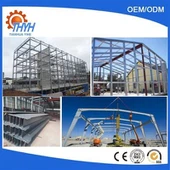
I-beam / H-beam structures: Optimal for long-span horizontal members where bending strength is critical. Standard in portal frames and platform structures.
Truss configurations: Best for very long spans (15m+) where weight optimization is important. More complex to fabricate but material-efficient.
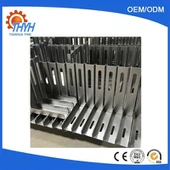
Plate fabrications: Custom-welded plate structures (e.g., box columns with internal stiffeners) for heavy-duty applications requiring specific cross-sections unavailable in standard sections.
Future Development Trends
The custom steel fabrication industry is evolving rapidly. Key trends shaping 2026 and beyond include: increased automation with robotic welding reducing labor costs by 30–40%; BIM (Building Information Modeling) integration streamlining design-to-fabrication workflows; growing demand for HDG-treated structures as Australian infrastructure investment accelerates; and the emergence of high-strength steels (Q690, Q890) enabling lighter, more efficient designs for mining and structural applications.
Key Takeaways
Mining, civil infrastructure, solar, and agricultural sectors are the primary applications for custom steel structures in Australia
Material costs account for 40–55% of total fabrication cost; design optimization can reduce processing costs by 10–20%
AS/NZS 4680 HDG treatment is essential for outdoor structures, providing 50+ years of corrosion protection
Structural style selection (box section, I-beam, truss, plate fabrication) should align with load and span requirements
Robotic welding automation and BIM integration are driving cost reductions and quality improvements
Planning a Custom Steel Structure Project?
Get a detailed cost breakdown and manufacturing consultation from our engineering team. We serve Australian B2B clients with 20+ years of experience and ISO 9001 + AS/NZS 4680 certifications.
Email: andywang@qdthyhmetalfab.com | WhatsApp: +86 138 6398 9651
Request a free project quote or explore our OEM welding fabrication capabilities.