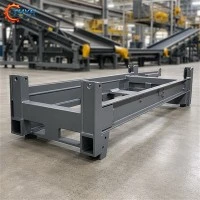
TL;DR: Most quality problems in custom sheet metal and welded fabrication do not come from one dramatic mistake - they come from handoffs between process steps. How a fabrication plant organizes its work zones determines how material flows, where inspection happens, and whether errors are caught early or discovered after galvanizing. This article walks through the work zones inside our 7,000 m² facility in Qingdao and the quality control node built into each one.
When an OEM buyer reviews a fabrication quote, they usually compare price, certification names, and lead time. What they rarely see is the thing that quietly decides whether the first article matches the drawing: the physical layout of the factory that will make their parts.
At Qingdao Tianhua Yihe Metal Fabrication, our engineering team thinks about layout as a quality system, not a floor plan. Every material handoff is a chance for a mix-up - wrong gauge, wrong batch, unfinished edge. So each work zone in our 7,000 m² facility has one job, one inspection node, and one clear path to the next zone. Here is what that looks like, zone by zone.
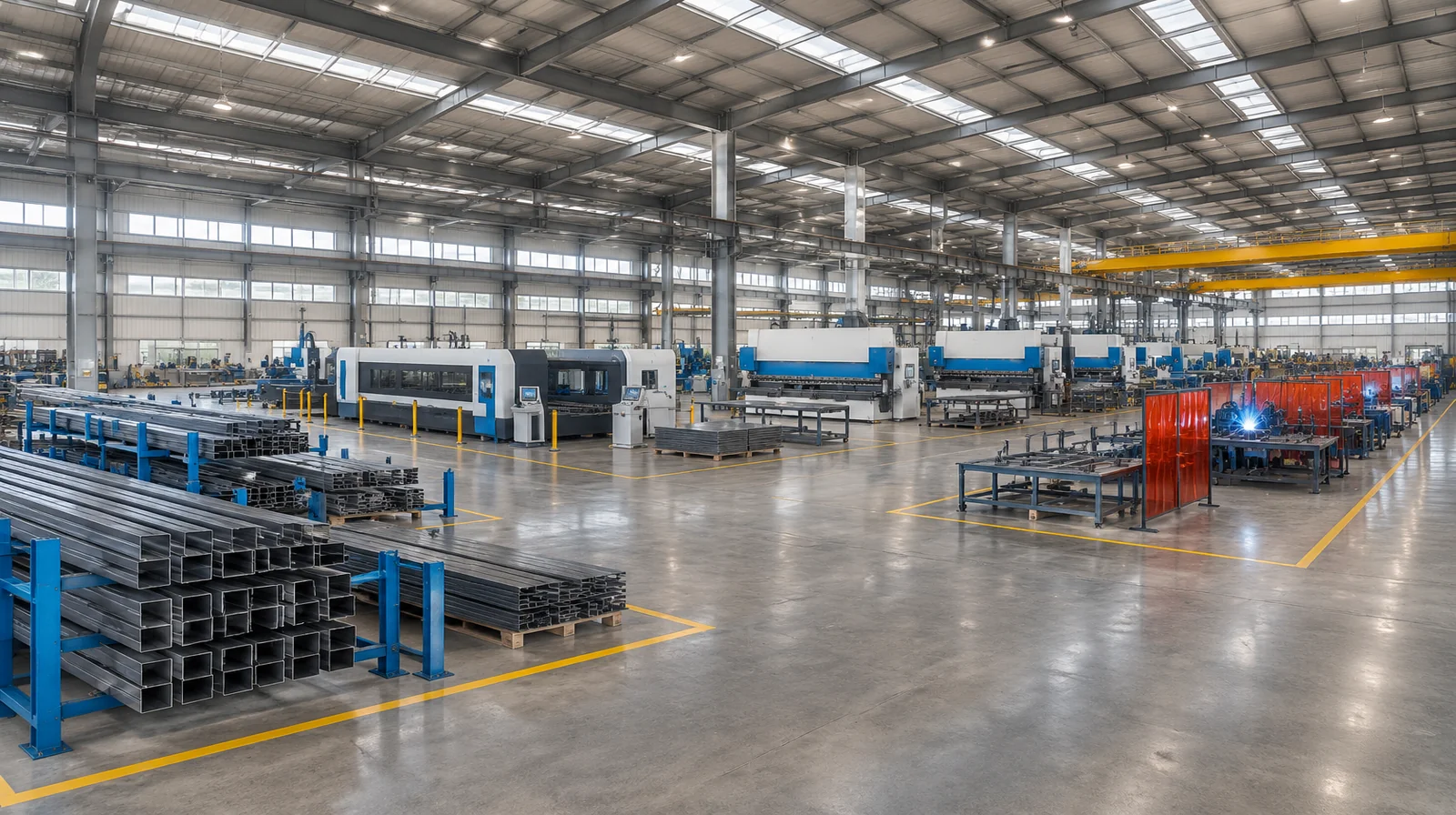
Zone 1: Material Receiving and Verification
Everything starts before cutting. Incoming steel plate and sheet are checked against the purchase order and the material certificates, typically EN 10204 type 3.1, before anything enters production storage.
Certificate check first: mill certificates are matched to heat numbers, not just to shipping labels.
Segregated storage: verified material is stored by grade and thickness; unverified material is quarantined until cleared.
Traceability tags: each bundle carries an internal tag so the laser operator knows exactly what grade is on the table.
Better approach for buyers: ask any supplier how they link mill certificates to in-production parts. "We keep certificates" is not the same as "we can trace this bracket to its heat number."
Zone 2: Laser Cutting
Our fiber laser cutting cells handle the sheet and plate work across our sheet metal fabrication service. The quality node here is simple but strict: the first cut piece of every job is measured against the drawing before the batch continues.
Program review: nesting and kerf compensation are checked against the DXF before cutting starts.
First-article check: hole positions, slot widths, and edge quality are confirmed on the first piece.
Edge inspection: cut edges are examined for dross and striation consistent with the specified quality class.
Zone 3: Bending and Forming
Bending is where most dimensional disputes between buyers and suppliers are actually born. A 3 mm hole placed 4 mm from a bend line will distort; a bend radius that ignores the material's minimum radius will crack.
Setup sheets per job: tooling, bend sequence, and bend allowances are written down, not remembered.
First-bend verification: angles are checked with protractor and sample flat-pattern comparison before the batch runs.
Springback compensation: adjusted per material batch, because the same grade from different mills can behave slightly differently.
Zone 4: Welding
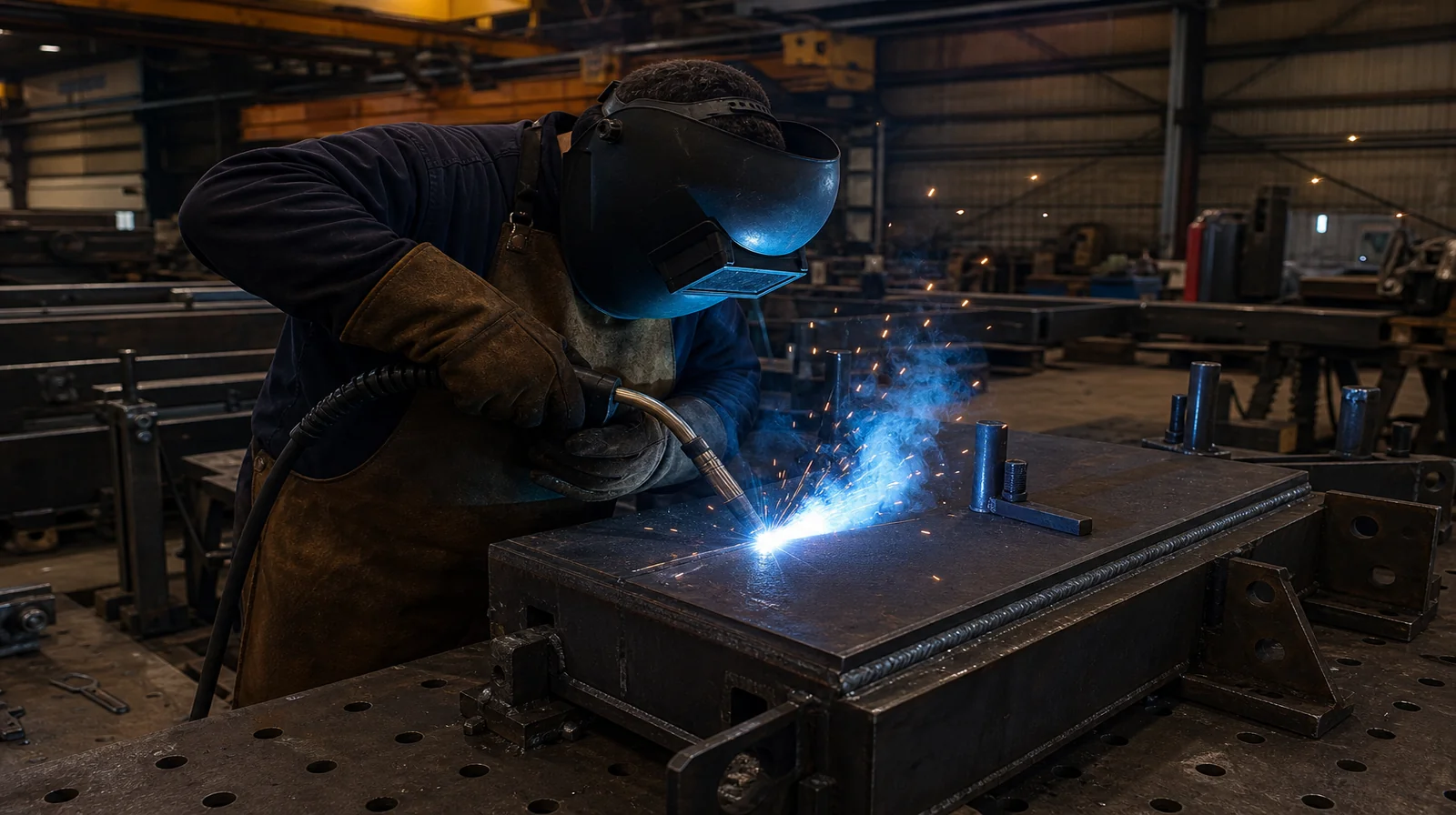
Welding quality is governed under our ISO 9001:2015 quality management system with qualified procedures and welders under AWS D1.1 and AWS D1.3 standards. It is the zone where layout earns its keep - because weld integrity depends on what happened upstream.
Joint preparation check: fit-up gaps and bevel angles are verified before arcs are struck.
Preheat discipline on heavy plate: for thicker sections and higher-carbon-equivalent grades, preheat is verified on both faces at the required distance from the joint, and re-verified after any interruption.
WPS-based work: welders work to qualified welding procedure specifications (WPS), and each critical weld pass is recorded.
For buyers evaluating a supplier's welding capability, our heavy plate welding page outlines this discipline in detail.
Zone 5: Finishing Preparation and HDG Coordination
Surface finish is a system decision, not an afterthought. Parts destined for hot-dip galvanizing are reviewed first for venting and draining, because a pocket that traps zinc is a defect waiting to happen.
HDG-ready design check: vent and drain holes confirmed against the part geometry before dispatch to qualified hot-dip galvanizing lines operating to ISO 1461, ASTM A123, and AS/NZS 4680.
Masking and protection: threads and critical surfaces are masked where the specification requires it.
Coating verification: coating thickness is measured and recorded against the applicable standard with calibrated magnetic gauges.
Where powder coating or liquid paint is the better choice for the environment, that decision belongs in the RFQ stage - see our finishing and fabrication options for how we handle the trade-offs.
Zone 6: Final Inspection and Documentation
Before anything is packed, the completed part is inspected against the drawing and the inspection plan.
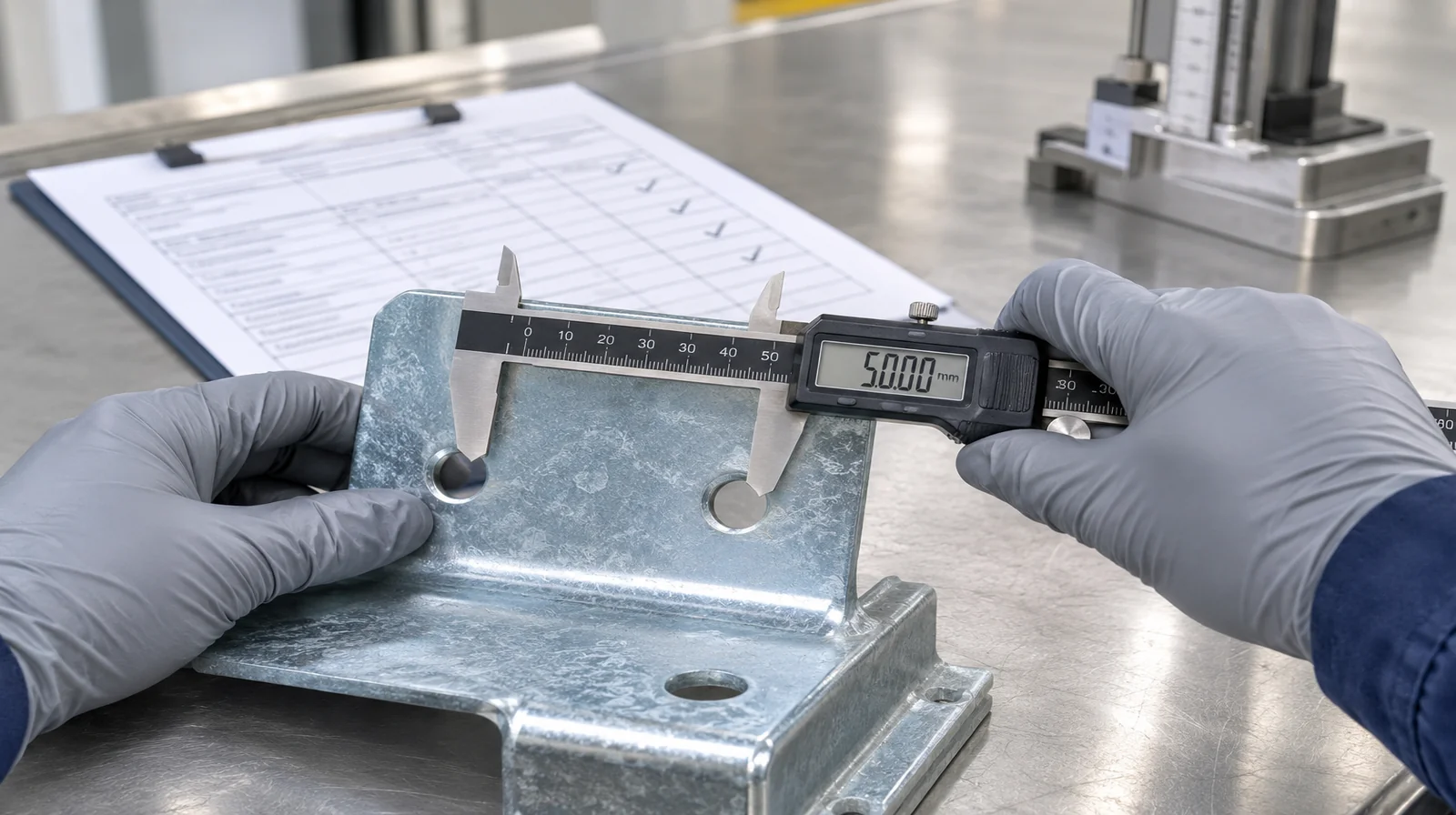
Dimensional report: key dimensions recorded with calibrated tools, not just eyeballed.
Weld and coating records attached: the documentation travels with the parts, matching the certificate chain started in Zone 1.
Non-conformance loop: any rejected part is tagged, quarantined, and root-caused rather than quietly reworked.
Zone 7: Packing and Dispatch
The last zone protects everything the first six achieved. Structural assemblies and fabrications destined for OEM projects - from platforms to enclosures - are packed to survive container transport.
Load planning: heavy fabrications are blocked and braced; overhead cranes and heavy-duty forklifts handle large-format parts without contact damage.
Milestone updates: our structural steel OEM customers track five checkpoints - material, cut, weld, HDG, loaded - so there is no silence between PO and shipment.
Frequently Asked Questions
Does factory layout really affect part quality?
Yes - indirectly but strongly. Most fabrication defects originate at handoffs between processes: wrong material introduced at cutting, missing preheat verification at welding, coating damage at packing. A zoned layout with an inspection node at each transfer catches problems where they start.
What should I look for during a supplier factory audit?
Focus on material segregation and traceability, first-article inspection practice at cutting and bending, welder qualification and WPS availability, and how non-conforming parts are quarantined. Physical organization is usually a reliable proxy for process discipline.
Can you supply parts with EN 10204 3.1 material certificates?
Yes. Incoming material is verified against mill certificates with heat-number traceability, and 3.1 certificates are provided with the shipment on request - the documentation chain continues through welding and coating records.
How do you handle hot-dip galvanized parts with tight tolerances?
HDG adds coating thickness and involves immersion temperatures, so critical-fit surfaces are discussed at the RFQ stage. Where needed, we plan masking, machining after galvanizing, or an alternative finish such as powder coating for the specific environment.
Get a DFM Review Before You Order
Send us your drawing, material specification, and target quantity. We will return a DFM report within 48 hours covering tolerance feasibility, welding joint recommendations, surface finish options, and potential cost-saving changes. No commitment required.
Related Reading
→ Sheet Metal Fabrication - materials, laser cutting capability, and finishing options
→ Heavy Plate Welding - welding quality management, preheat verification, and distortion control
→ Structural Steel OEM - five-node milestone updates from material to loading
About the Publisher
Qingdao Tianhua Yihe Metal Fabrication (qdthyhmetalfab.com) is an ISO 9001:2015 certified OEM manufacturer based in Qingdao, China. We work with engineering teams on custom sheet metal fabrication, heavy plate welding, and structural steel assemblies, delivering hot-dip galvanized components fully compliant with ISO 1461, ASTM A123, and AS/NZS 4680 standards.